

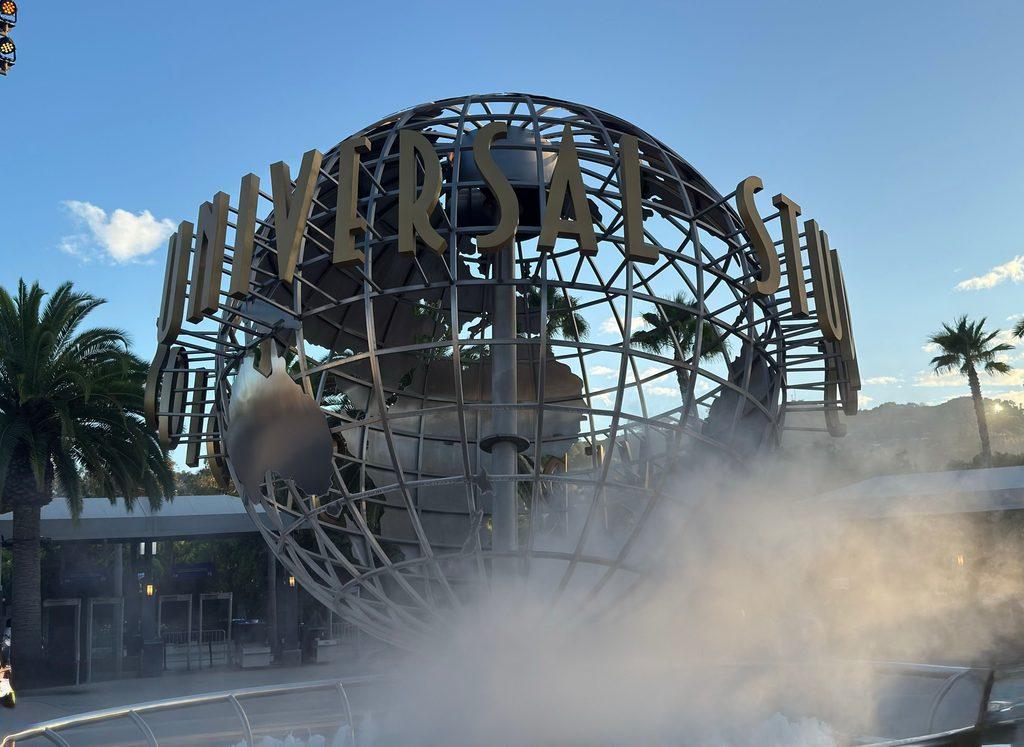
What if the same place that makes your kids say, “That was so much fun,” could also make them ask, “How did they do that?”
Last week, we brought viewers along for an exclusive look at Disneyland and Disney California Adventure and showed how families can use our comprehensive HEART Method™ to uncover the history, science, technology, storytelling and creativity hiding in plain sight throughout the parks. The idea is simple: You don’t need to add homework to your vacation. You just need to become a little more curious about the experience you’re already having.
This week, we’re taking that same approach to Universal Studios Hollywood.
Every theme park has its own personality and its own way of telling stories, and Universal is particularly fascinating because so much of the experience is about how entertainment is made.
This is Hollywood, after all.
Behind the rides and characters are movie sets, special effects, animation, technology, engineering, architecture, music, storytelling and an enormous amount of creative problem-solving. And then there are the fully immersive worlds that ask us to temporarily forget that we’re standing in a theme park at all.
Once you start looking at Universal through that lens, a day at the park becomes much more than a collection of attractions. It becomes an opportunity to ask questions about how the world around you works- and how filmmakers, authors, engineers, artists and designers can make us believe in worlds that don’t actually exist.
Start With the Studio Tour
For me, the natural place to begin is the World-Famous Studio Tour.
It is one of the best examples of how Universal can turn entertainment into an opportunity to explore Hollywood history, filmmaking, technology and engineering all at once.
As you move through the studio lot, you’re seeing the physical side of filmmaking: sets, vehicles, props, soundstages, special effects and locations that have been transformed into entirely different places for movies and television.
Instead of simply pointing out what you’re seeing, ask your kids to think about what makes a movie set believable.
What details make you feel as though you’re standing in a real town, neighborhood or historical location? What is actually real? What has been carefully designed to look real? Why does one building immediately tell you that you’re in one place while another makes you feel as though you’ve traveled thousands of miles?
That question can lead almost anywhere.
You can talk about scale and perspective, architecture and design, lighting and sound, camera angles and even the psychology of how our brains interpret what we see.
Suddenly, you’re not just touring a movie studio.
You’re investigating how Hollywood creates an illusion.
Learn to Read a Place
That same idea continues the moment you step off the Studio Tour and begin walking through the park.
Look at the buildings, storefronts, signs, streets and landscaping around you. Notice how color, texture, scale and architecture establish a sense of place.
Ask your child:
How can you tell where we are without anyone telling you?
That’s a deceptively simple question.
Maybe it’s the architecture. Maybe it’s the language on a sign. Maybe it’s the colors, music, clothing, landscaping or food. Maybe it’s the shape of the buildings or the materials used to construct them.
In other words, you’re teaching children how to read an environment.
And that’s an important skill far beyond a theme park.
Designers use visual clues to communicate information constantly. A building can tell you what country you’re in. A street can tell you what decade you’re supposed to be experiencing. A color can signal danger or excitement. Music can tell you whether you’re entering somewhere mysterious, playful or dramatic.
At Universal, those clues are intentionally amplified because the goal is to make you believe you’re somewhere else.
Which brings us to one of the most extraordinary examples in the entire park.
Step Into The Wizarding World
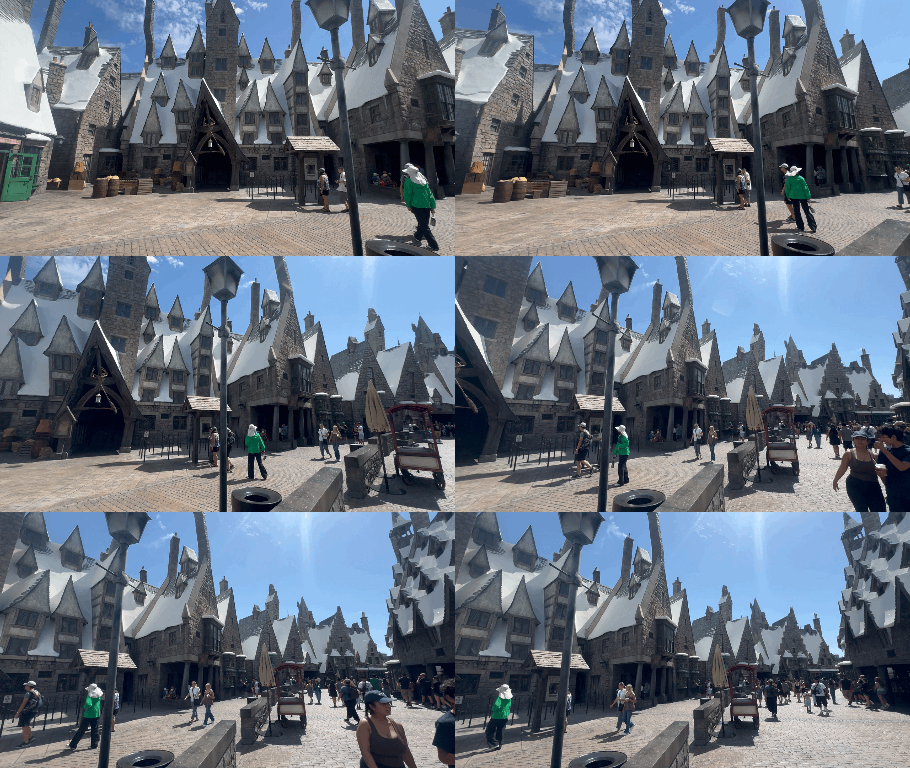
The Wizarding World of Harry Potter is an incredible example of what happens when a fictional world is built with enough detail that we begin to experience it as a real place.
And this is where reading, research, architecture and storytelling collide.
Before you even ride an attraction, look around. Why does the architecture look the way it does? How do the shapes, materials, colors and textures make the buildings feel old (or cold) and establish a world that exists outside our own?
Then ask: How did the designers know what to build?
Many of the answers came from J.K. Rowling’s books. Some came from the films. And some had to be imagined to fill in the spaces between them.
That opens up a fascinating conversation about world-building. An author might describe a street, shop or castle in a few paragraphs. A filmmaker translates those words into something audiences can see. A theme park designer takes it one step further, creating a world people can actually walk through.
You can ask your child: If you were creating a world from a book, what would you need to know? Where would people live? What would they eat, wear and sell? What would their streets sound like?
And perhaps the most interesting question: What happens when the author never told you the answer?
That’s where research and imagination meet.
From Reading to Research
The Wizarding World is also a reminder that reading doesn’t have to stop when you close the book. A story can become a jumping-off point for research.
If your child is fascinated by Hogwarts architecture, research medieval castles. Curious about owls? Compare real owls with the way they’re portrayed in the story. Wondering about magical creatures? Explore the mythology and folklore that inspired them.
You can even compare the books with the movies and the theme park. What stayed the same? What changed? What did the designers add to make the world feel complete?
That is Reading & Research in action- and it doesn’t feel like an assignment because the question came from your child.
The HEART Method
This is really what the HEART Method is designed to do.
HEART stands for:
H — History & Humanities
Look for the stories, people, cultures, historical influences and human experiences behind what you’re seeing.
E — Engineering & Exploration
Ask how something was designed, built and operated- and what it takes in terms of imagination and logistics to create an experience at this scale. Is this based on a real place we can visit or learn about?
A — Arts & Culture
Notice the architecture, music, costumes, visual design, animation, performance, food and other creative choices that shape the experience.
R — Reading & Research
Connect what you’re experiencing to books, stories and questions you can investigate before, during or after your trip.
T — Technology & Science
Look for the physics, biology, chemistry, technology, special effects, robotics, sensors and other scientific ideas making the experience possible.
The HEART Method isn’t a curriculum.
It’s a way of looking at the world a little differently.
You don’t have to find all five categories every time you visit an attraction. You don’t even have to consciously think about the acronym while you’re there.
Instead, use it as a mental prompt:
What is here that makes me curious? What can I learn from this ride or land?
When a Video Game Becomes a Real Place
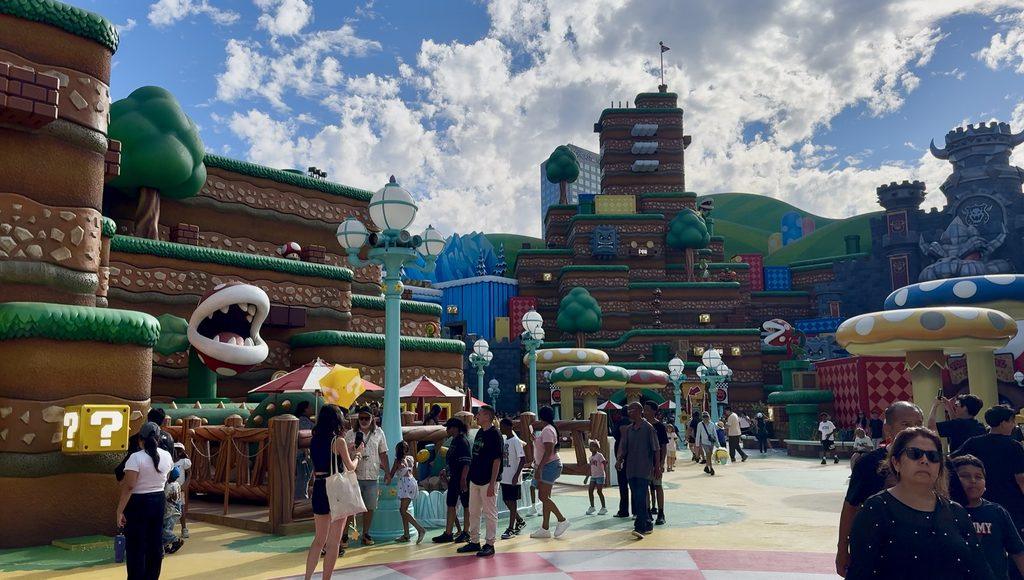
SUPER NINTENDO WORLD offers a completely different version of the same idea.
Here, a world that began as a video game becomes a physical environment.
That creates an entirely different set of questions.
How do you take something that existed on a screen and turn it into a place people can physically walk through? How do interactive elements know what you’re doing? How are game mechanics translated into real-world experiences?
You can talk about sensors, tracking, interactive technology and game design.
But there’s another interesting conversation hiding here, too:
What makes a game fun?
Why do certain challenges make us want to keep playing? Why do rewards motivate us? Why does competition change the way we experience something?
That’s technology and science, but it’s also psychology, design and storytelling.
Again, one experience can touch multiple parts of the HEART.
Science Fiction Can Lead to Science Fact
Universal also makes it easy to explore the fascinating space between imagination and reality.
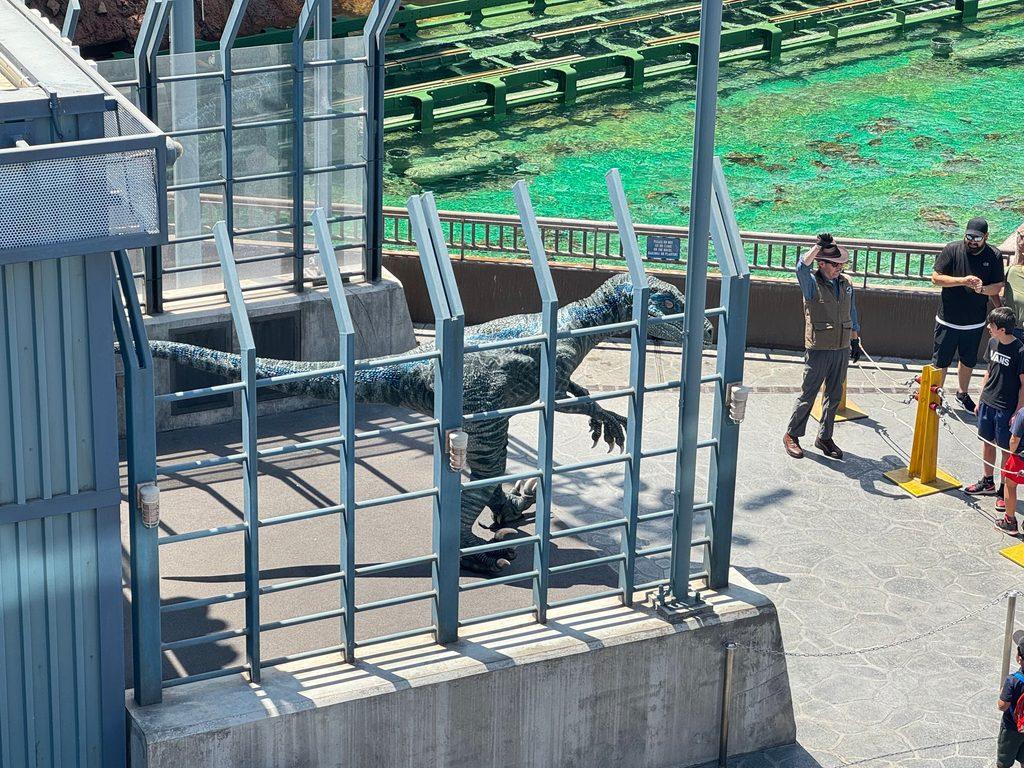
Take Jurassic World.
The dinosaurs are spectacular examples of science fiction brought to life, but they can also lead to real questions about paleontology, biology and geology.
What do we actually know about dinosaurs? How do scientists know what they looked like? What evidence survives from millions of years ago? How do scientists reconstruct an animal from fossils?
And then there’s the entertainment question:
How do you make a dinosaur feel real?
Movement. Sound. Water. Lighting. Scale. Timing. Perspective.
All of those elements work together to convince your brain that something impossible is standing right in front of you.
You can ask your child which part of the experience made the dinosaur feel most believable.
Was it the sound?
The movement?
The size?
The fact that it appeared unexpectedly?
Now you’re talking about both science and storytelling.
Why Did That Ride Feel That Way?
The same approach works on attractions throughout the park.
A ride doesn’t simply move you from one place to another. It uses motion, sound, darkness, light, screens, perspective and timing to influence what you see and how your body responds.
That makes one of my favorite questions surprisingly powerful:
Why did that feel the way it did?
Maybe the answer is speed. Maybe it’s acceleration, gravity or inertia. Maybe the ride felt faster because you couldn’t see what was coming. Maybe the sound made the experience feel more intense.
And then there’s Fast & Furious: Hollywood Drift, Universal Studios Hollywood’s new high-speed roller coaster- and we were among the first people ever to ride it. I couldn’t even begin to adequately describe the intensity of that ride, or everything that goes into creating an experience like it. The coaster combines high-speed movement with vehicles that rotate as they travel, creating the sensation that you’re actually drifting through the course.
But underneath all that adrenaline is an incredible physics lesson. Acceleration, inertia, gravity and the forces created as the vehicle changes direction are all working together to create what your body feels. The rotation of the vehicle adds another layer, changing your orientation and challenging your brain to process movement in a completely different way. It’s one thing to learn about physics in a textbook; it’s another to feel those forces happening to you at high speed. It’s certainly not a ride for the little ones, but they can see it move around the track and use observation to learn about those forces in real time.
Ask your child to make a prediction before an attraction.
Then afterward, ask:
Was that what you expected? Why or why not?
That’s the scientific process in miniature: make an observation, form a prediction, experience the result and reconsider your thinking.
And nobody had to hand them a worksheet.
Watch How Hollywood Creates Believable Worlds
One of the things I find most fascinating about Universal is that the park is essentially a master class in controlled perception.
Look around and notice how the architecture, colors, sounds, costumes, signs, food and even the distance between buildings work together to tell you what kind of world you’re in.
Ask your kids: What clues are telling you where we are? Then see if you can find a place where the theme park almost disappears from view.
What details keep you immersed, and what breaks the illusion? It’s a simple way to introduce the idea that environments are designed- not accidental.
And Yes, Even the Food Counts
I would never leave food out of the conversation. Food is one of the easiest ways to connect travel with learning: Where did it come from? Why do people eat it? How is it prepared? What does it tell us about a culture or place?
At Universal, food is also part of the storytelling, particularly in The Wizarding World of Harry Potter and SUPER NINTENDO WORLD. Three Broomsticks even has traditional English fare allowing kids to inquire about British culture and food. Highlights include an English Breakfast, Bangers & Mash, Fish & Chips, and Shepherd’s Pie (all are delicious!)
Sometimes the best question is simply: Have you ever tried this before? Trying something unfamiliar is its own form of exploration.
You Don’t Have to Do It All
The biggest mistake would be trying to turn every moment into a learning opportunity. You don’t need to.
Instead, follow whatever genuinely catches your family’s attention.
Maybe your child wants to know how a movie set works, how Mario Kart tracks movement, why one coaster feels faster than another, or how you could build an entire world from a book.
That’s the HEART Method.
It’s not about adding more to your vacation. It’s about noticing more of what is already there.
I love the simple process: LOOK → ASK → PREDICT → INVESTIGATE.
Look closely. Ask a question. Make a prediction. Then investigate. And if that question follows you home, even better. Look it up together, find a book, watch a documentary, try an experiment or research the history behind what you experienced.
The theme park becomes the beginning of the learning- not the end.
Turn Curiosity Into the Memory
Ultimately, this isn’t about making your vacation more educational. It’s about making it more memorable.
The best family travel doesn’t always come from checking the most attractions off a list. Sometimes it’s the moment your child notices something you didn’t, asks a question you can’t answer, and the two of you decide to figure it out together.
That’s at the heart of Memory-First Travel™. The experience isn’t just the ride you went on or the picture you took. It’s the conversation you had because of it, the question that stayed with you on the drive home, or the story you researched together a week later. It’s creating the kind of memories you’ll all still be talking about years from now.
Universal Studios Hollywood gives families countless opportunities to look behind the entertainment and discover the creativity, science, technology, history and storytelling that make the magic possible.
So enjoy the rides. Eat the food. Take the pictures. Get swept into the stories.
And every once in a while, stop and ask:
How did they do that?
You might be surprised where the question takes you.
Because you don’t have to turn a theme park vacation into school. You just have to know where to look.
And that’s the HEART Method: turning the fun you’re already having into opportunities to explore, discover and learn together.
For more ideas, download our free Universal Studios Hollywood HEART Method guide at this link and ALL of our guides at FoodFamilyTravel.com.
If you’re planning to stay a little longer, Universal is currently offering Buy a Day, Get a 2nd Day FREE for qualifying tickets through December 16, 2026. More time means more rides, more exploring- and more opportunities to turn curiosity into a memory.