


If there’s one thing I’ve learned from my own family, it’s that Thanksgiving can bring together just about every political viewpoint imaginable. We have conservatives, moderates, progressives, religious conservatives, fiscal conservatives, social liberals, libertarians, independents, people who are deeply committed to conventional medicine and others who are skeptical of it, people with very different views on vaccines, climate change, immigration, gun rights, education and just about everything else.
Our family has a big tent, and let’s just say we don’t always agree under it. We passionately disagree on plenty of issues. But over the years, I’ve learned one very important lesson from our holidays: leave the politics out of it. Unless you want to spend the day miserable, you do not have to turn Thanksgiving into a referendum on the midterm elections. It’s far more fun (and productive!) to debate the best way to cook a turkey or whose stuffing recipe deserves a place at the table. I’m unapologetically pro-sausage-and-mushroom stuffing, made with my Grammy’s recipe and good old-fashioned white bread- not cornbread. Now THAT is a debate worth having (and fun to enjoy the results).
I’ve also covered the White House and Congress, and having lived in blue, red and purple states, I’ve seen firsthand how differently people can view the very same issues. I’ve watched politicians and policymakers passionately disagree, sometimes going head-to-head on camera, only to see those same people chatting, laughing and spending time together once the cameras were off. That still happens, despite what you might see online, and I think there’s something worth learning from it. You can disagree strongly with someone and still share a meal, have a conversation or simply enjoy each other’s company.
And we’re not imagining the tension. The divisions in this country are real, and the research reflects how much political conversations can weigh on people. Americans don’t fit neatly into two political camps, and many hold a mix of views that don’t fall along predictable party lines. It’s no surprise that the thought of political arguments at holiday gatherings can leave people feeling stressed before the turkey even makes it into the oven.
So, how do you bring a family with wildly different opinions together for the holidays without letting politics take over? You don’t need to agree on everything, and you certainly don’t need to win an argument. A little planning, a sense of humor and a willingness to change the subject can go a long way. Here are five ways to keep the focus on what matters – and actually enjoy the holidays together.
Five Ways to Keep Politics From Taking Over Thanksgiving
1. Master the Graceful Subject Change
You don’t have to answer every political comment, correct every talking point or take the bait when someone brings up the latest headline. Sometimes the easiest way to keep the peace is to acknowledge what was said, change the subject, and gently move the conversation along.
A few phrases can come in handy:
- “I’m feeling a little politics-ed out. I want to hear how your trip/flight/interview went!”
- “That’s certainly one way to look at it. So, who’s been watching anything good lately?” (Bonus points if you can talk about Widow’s Bay or some other complex out of left-field show)
- “We may not all see things the same way, and that’s okay. There’s plenty more we have in common. Now, who’s ready for another helping?””
- “Speaking of things we can all agree on, I can’t wait for dessert. What’s your favorite: apple pie or pumpkin pie?”
- “We can debate that another time- it’s the holidays. Right now, I want to hear what’s happening with all of you.”
The trick is not to sound sarcastic or dismissive. You’re simply giving everyone permission to talk about something else. And if the subject keeps coming back, change it again. You are not obligated to moderate a family debate.
2. Set Boundaries Before Someone Crosses Them

If you know certain topics or personalities tend to set off fireworks, it can help to establish a little ground rule before everyone sits down. You don’t need a formal family meeting or a lecture about civility. A simple, good-natured “We’re taking a break from politics this Thanksgiving. Let’s enjoy being together” can go a long way.
If someone ignores the request, be a little more direct: “I love you, but I’m really not getting into this today.” You can be warm and firm at the same time. And remember, a boundary isn’t an attempt to control what someone thinks. It’s a decision about what you’re willing to participate in.
3. Get Curious About the Person, Not Their Politics
Sometimes we become so focused on someone’s political opinions that we forget there is an entire person sitting across the table. Ask about their new job, their kids, a recent trip, a hobby or something they’ve been looking forward to. You might discover common ground in places you didn’t expect.
If a political conversation does happen and everyone is genuinely interested in having it, try asking a question rather than immediately launching into a rebuttal. “What makes you feel that way?” can lead to a more thoughtful exchange than “How could you possibly believe that?” You don’t have to change someone’s mind to have a civil conversation. And you certainly don’t have to agree with their answer.
4. Give Everyone Something Better to Talk About
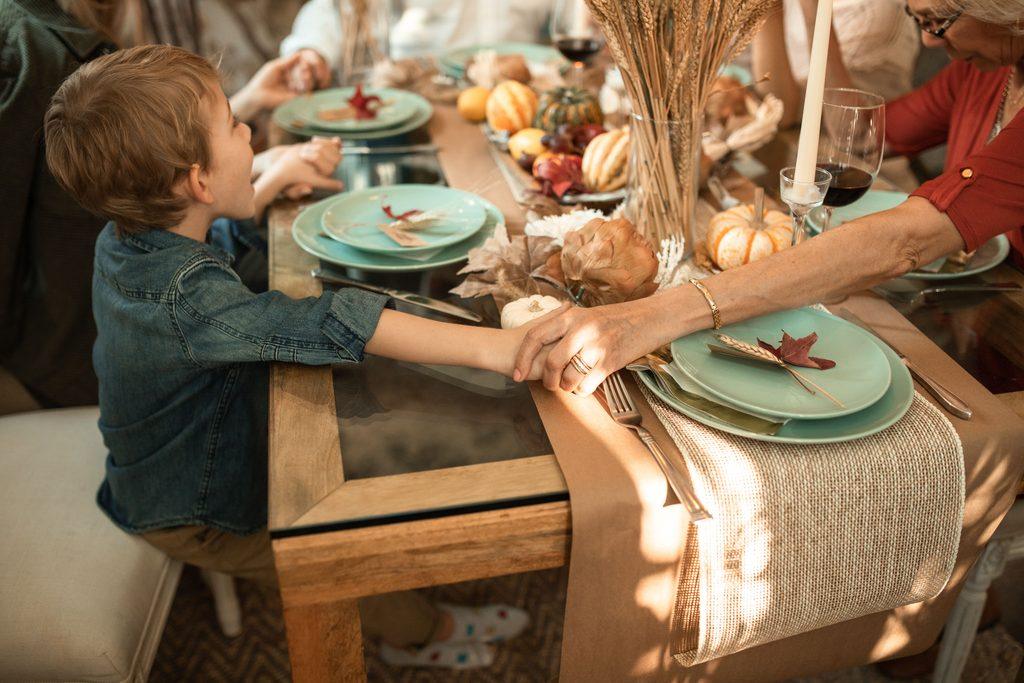
A little planning can make a big difference. Don’t leave the entire afternoon to whoever has the strongest opinions or the loudest voice. Create opportunities for people to connect around something they actually enjoy. We’ve brought card games and board games to potentially difficult get togethers so that people who don’t want to engage in a political discussion, don’t have to.
Bring out old family photos. Ask everyone to share a favorite holiday memory. Put together a playlist, sing karaoke (our favorite), play a game, organize a family walk or get everyone involved in preparing a dish. You could even ask each person to share one thing they’re grateful for this year or one place they’d love to visit.
Food is usually a pretty reliable common denominator. Let people talk about the recipe, the restaurant they discovered, the meal they’re planning next or who makes the best pie. Give the conversation somewhere else to go.
5. Know When to Step Away- and When to Change the Scenery
Not every tense conversation needs to be rescued. Sometimes the best response is to take a walk, help in the kitchen (this will make you a family hero), check on the kids or give yourself a few minutes outside. If the conversation gets heated, a little space can be more effective than trying to have the last word.
And remember, it’s not your job to manage everyone else’s behavior or single-handedly keep the peace. Everyone sitting around the table has a responsibility to be considerate. You can redirect a conversation, set boundaries and do your part to keep things pleasant, but you can’t control how other adults choose to behave. Don’t put the entire responsibility for a happy holiday on yourself- or the host or hostess.
If your family gatherings have become consistently stressful, consider changing the tradition. Host a smaller gathering, meet somewhere neutral, plan an activity or take a trip together. Sometimes a different setting helps everyone reset.
At FoodFamilyTravel.com®, we often talk about Memory-First Travel™ and ask ourselves, “Will I remember this five years from now?” It’s worth asking the same question about the holidays. Do you want to remember the argument over the election- or the evening everyone laughed around the table?
It’s an easy call in our house. Pass the stuffing this Thanksgiving, and pass on the politics.