


Thanksgiving is supposed to be about gratitude, family, great food and spending time with the people we love. But when families bring together a wide range of political viewpoints, how do you keep disagreements from taking over the holiday?
I had a wonderful conversation with Bethany Crouch on CBS Good Day about how to navigate political conversations during Thanksgiving, set healthy boundaries, redirect uncomfortable conversations and focus on what really matters: being together.
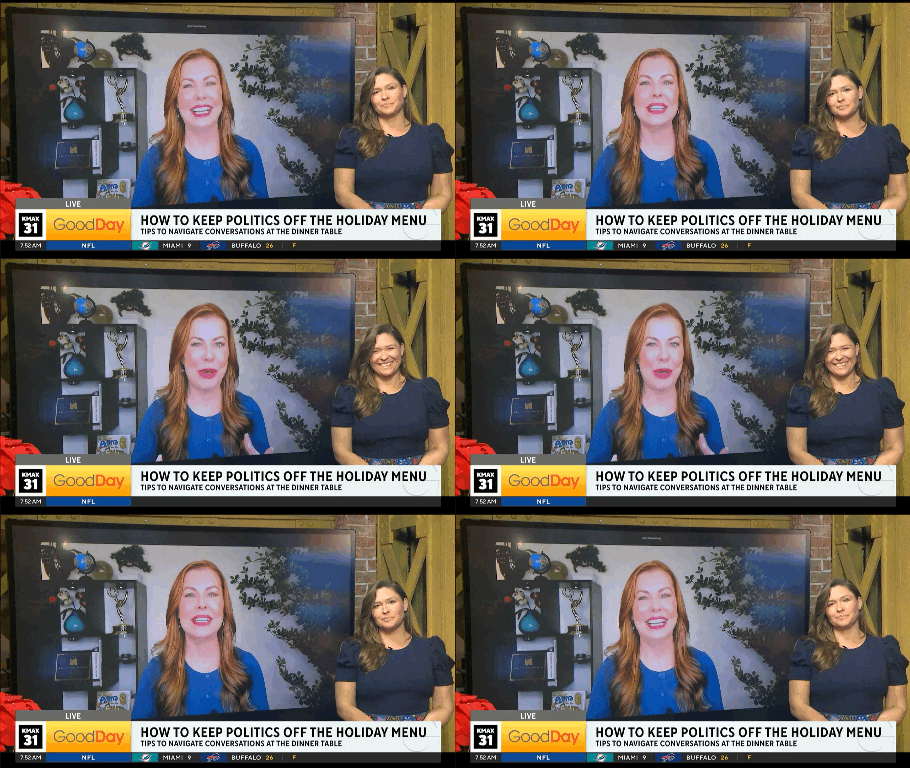
The conversation builds on our FoodFamilyTravel.com® article, From Ballots to Butterballs: 6 Ways to Keep Politics off Your Menu This Holiday. And the advice is really just practical, common sense. Think about how you would behave in a movie theater or at a work dinner. You probably wouldn’t stand up in the middle of a movie and start shouting your political opinions, or turn a business dinner into a heated argument. Yet sometimes, when we’re around family, we let our guards down and forget those same basic courtesies.
Of course, family is where we’re often most comfortable being ourselves. But that doesn’t mean civility goes out the window. If you wouldn’t behave that way in public, it’s worth asking yourself whether it’s appropriate at the Thanksgiving table, too.
The goal isn’t to pretend we all agree or avoid every meaningful conversation. It’s about being intentional about the kind of memories we want to create and recognizing that not every disagreement needs to become a debate over dinner.
6 Ways to Keep Politics from Taking Over Thanksgiving
1. Set the Tone Before Everyone Arrives
It starts with remembering why we’re gathering in the first place. We’re coming together to celebrate family, friendship, gratitude and the people who are important to us.
As a host, you have an opportunity to set that tone before anyone even sits down. You can make it clear that this is a time to reconnect, enjoy one another and take a break from the things that divide us.
You don’t have to agree on everything to have a wonderful holiday together. You can respect someone’s right to have a different opinion without feeling obligated to debate it over the mashed potatoes.
The goal isn’t to change anyone’s mind. It’s to make sure everyone leaves feeling connected rather than divided.
One idea I love is creating a designated “political back room.” If guests genuinely want to get into politics and debate the issues, give them a space where they can do that. But keep the rest of the house, especially the dining room and gathering spaces, politics-free. That way, you’re not telling people they can’t have those conversations; you’re simply creating a space where everyone else can enjoy the holiday without feeling like they’re sitting in the middle of a political debate.
2. Set Your Intentions Before the Holiday
We spend so much time preparing the food, decorating the house, planning the menu and making sure everything looks beautiful. But how much time do we spend preparing ourselves emotionally?
Before guests arrive, take a moment and decide what kind of experience you want to create.
Maybe your intention is:
- I’m going to prioritize connection over being right.
- I’m not going to take the bait if someone says something provocative.
- I’m going to look for opportunities to bring people together.
- I’m going to protect the joy of the day without feeling like I have to control everyone.
You can also decide ahead of time what you’re not going to participate in. If you know there’s a particular topic that always creates tension, you don’t have to wait until everyone is arguing to establish a boundary. This is also true of guests. Think about how you may want to deal with a difficult conversation ahead of time so that you aren’t caught off guard in real-time.
A little intention-setting can change how you respond in the moment. Instead of reacting emotionally, you’re responding based on the experience you want to create.
3. Have a Few Graceful Ways to Change the Subject
The key is to redirect without embarrassing anyone. You don’t have to call someone out or make them feel like they’ve done something wrong. You can acknowledge what they’re saying and gently move the conversation somewhere else in a kind way.
Here are a few phrases you can actually use:
- “I know this is really important to you, but I’m so politicked-out right now. Can we save this conversation for another time that’s not the holidays?”
- “I love that we can all have different perspectives, but I’d really love to enjoy tonight together.”
My favorite approach is to ask a question that gives everyone something new to talk about:
Ask about what’s happening in someone’s life. How are the kids? What’s new at work? Is anyone planning a big change or looking forward to something? Bring up a family memory, especially one involving someone everyone loved. Sometimes simply asking someone to tell the story about the time Grandpa did something ridiculous can get the whole table laughing.
The idea is to show genuine interest in one another. Give people a reason to talk about something other than politics.
4. Set Boundaries Without Becoming the Holiday Referee
You can create the environment, set expectations and redirect the conversation, but you cannot control what another adult chooses to say or do. And you’re not responsible for making everyone agree.
This is where that movie theater or work dinner comparison comes in. Most of us understand that there are certain standards of behavior in shared spaces. We wouldn’t interrupt a movie to argue with strangers about politics, or make everyone at a professional dinner uncomfortable by turning the conversation into a political showdown.
So why should family be different?
It’s natural to feel more relaxed around the people we love. We may be more outspoken, less filtered and more willing to say exactly what’s on our minds. But being comfortable with someone isn’t a free pass to be disrespectful. If you wouldn’t say or do something in another social setting, take a moment to consider whether it’s appropriate at the family table.
Start with a gentle reminder:
“I really want everyone to enjoy tonight, please- let’s not turn Thanksgiving into a political debate.”
If someone continues, you can be a little firmer.
And if they still won’t let it go, it’s okay to physically change the environment. Get up and help in the kitchen, talk with your niece or nephew, refill someone’s drink, bring out dessert, excuse yourself to take a bathroom break, or move to another activity.
Remember, setting a boundary isn’t being rude. It’s communicating what you’re willing to participate in. And basic courtesy should apply at home just as much as it does everywhere else.
5. Give Everyone Something Better to Talk About
Sometimes the easiest way to stop a negative conversation is to give people something genuinely interesting and enjoyable to talk about.
Don’t just tell people what NOT to talk about. Give them something they WANT to talk about.
Here are a few simple ideas:
- The gratitude round: Have everyone share one unexpected thing they’re grateful for this year. It doesn’t have to be something big.
- The five-year memory question: Ask everyone to share a favorite family memory or experience from the last five years.
- The unexpected discovery: What’s something new you tried, a place you visited or something you learned this year?
- The family trivia game: Put together a few fun questions about family history, childhood memories or funny things that have happened over the years.
- The next adventure: Ask everyone where they’d love to travel, what they’d like to experience or something on their bucket list.
- The compliment challenge: Have everyone say something they appreciate about the person sitting next to them.
You can also get ahead of this by inviting everyone to bring their favorite family photos to share and talk about as a group. Have kids prompt questions (you never know what they may ask and you may learn). And don’t underestimate the power of getting people involved in something. Cooking together, making a signature holiday cocktail or mocktail, playing a game, looking through old family photos or taking a family walk can shift the entire atmosphere.
Sometimes people just need a little help remembering how much they enjoy one another outside of their political opinions.
6. Ask Yourself: Will I Remember This Five Years From Now?
This is really at the heart of how we approach travel, family and life.
I often ask myself, “Will I remember this five years from now?”
And I think it’s such a powerful question to bring into the holidays.
Will you remember the political argument that happened over Thanksgiving dinner five years from now? Maybe (actually, probably… yes). But is that really what you want to remember?
Or do you want to remember your children laughing with their grandparents? Your kids playing with their cousins they only see a few times a year. The incredible meal someone spent hours preparing? The family photo where everyone actually managed to get together? The stories that get told every single year?
We spend so much time documenting our lives, but sometimes we forget to actually be present in them.
Holidays are a perfect reminder that time together is precious. Families change, children grow up, people move, and we don’t always know how many more opportunities we’ll have to gather around the same table.
So before you react, before you engage in an argument, before you let something someone says ruin your evening, take a breath and ask yourself: Is this the moment I want to remember?
Because ultimately, Thanksgiving isn’t about having the last word. It’s about making memories with the people we love.