

Nearly 3,000 years after Homer’s The Odyssey was written, a new generation is reading it, watching it, singing it- and now, traveling in its footsteps.

There are some travel trends that begin with a destination.
And then there are the ones that begin with a story.
Right now, we’re watching the latter happen in real time.
I recently joined J.C. Fernandez on CBS in Las Vegas to talk about a travel trend I’m calling The Odyssey Effect– a renewed fascination with ancient Greece that is inspiring travelers to follow a story nearly 3,000 years in the making.
It’s an explosion of interest in the ancient world that is turning a nearly 2,700-year-old story into something remarkably modern—and inspiring travelers, particularly younger generations and families, to turn mythology into real-world adventures.
Christopher Nolan’s blockbuster The Odyssey has undoubtedly accelerated the phenomenon. But the story of this resurgence actually began years earlier online, with a project that showed just how powerful storytelling can be when a classic is reimagined for a digital generation.
(Be sure to follow FoodFamilyTravel.com on News Break and on Instagram: @food.family.travel for the latest travel & lifestyle stories, trends and tips)
Before Nolan’s Odyssey, There Was… EPIC: The Musical
A few years before Nolan’s film arrived in theaters, a young composer named Jorge Rivera-Herrans was reinventing Homer’s The Odyssey for the internet.
Rivera-Herrans began developing EPIC: The Musical in 2019 as a college project at the University of Notre Dame. In 2021, he began sharing snippets of the project online, initially through TikTok, allowing audiences to watch the musical evolve in real time. It eventually became a viral phenomenon across YouTube and other platforms, building a passionate global fan community.
The result was unlike a traditional musical.
Instead of waiting years for a Broadway theater to stage it, audiences could follow the creation of the story online. Fans watched songs develop, characters get cast, and pieces of the narrative take shape. The completed project became a nine-part, sung-through musical adaptation of The Odyssey, released as a series of “sagas” with the last saga debuting in December of 2024. Fans followed along during the actors’ promotional tour in Greece, starting the first modern wave of interest in tracing Odysseus’ footsteps.
And now, in perhaps the ultimate full-circle moment, EPIC itself is heading to the big screen.
In 2026, blockbuster producer Jerry Bruckheimer signed on to produce an animated feature adaptation of EPIC: The Musical with Rivera-Herrans. The project is still in development, with no release date announced yet.
So there are actually two major modern screen interpretations of Homer’s epic sailing into the cultural conversation at the same time, and they’re sure to keep generating waves of interest for years: Nolan’s live-action The Odyssey and the forthcoming animated EPIC movie.
And together, they are helping introduce Homer to an entirely new audience.
The Homer Renaissance Is Showing Up in Bookstores, Too
The most surprising part of The Odyssey Effect may be what is happening away from movie theaters.
People are actually reading the book.
The Odyssey is nearly 2,700 years old, yet sales have surged dramatically following the renewed cultural interest. U.S. print sales across editions were up 76% year-to-date, according to Circana BookScan data reported by Publishers Weekly. Emily Wilson’s translation has become particularly popular, while children’s editions and other mythology-inspired books are also seeing increased interest.
Libraries are seeing the phenomenon firsthand.
In San Francisco, hundreds of readers recently found themselves on waitlists for copies of The Odyssey, including hundreds waiting for digital and print editions.
And Barnes & Noble CEO James Daunt offered perhaps the best one-line description of just how extraordinary the resurgence is. Speaking to Bloomberg, he said:
“Right now, our best-selling book is by an author called Homer.”
Yes. THE Homer.
Much of the new interest is coming from younger readers. Our 8-year-old even begged me to track down a copy of The Telegony, the lost sequel to The Odyssey (lost, as in the original text no longer exists). When your child starts asking for a lost Greek manuscript, you realize mythology is definitely having a moment.
At bookstores, Gen Z readers are showing up looking for Homer after seeing Nolan’s film, while social media has made mythology feel less like an assignment from a classical literature class and more like something to discover, discuss, and share. It’s now “cool” to know the story by heart, to catch the differences between the movie and the book, and know every single Greek god, demigod, and location mentioned by Homer.
That is where travel comes in.
From Set-Jetting to Story-Driven Travel
For years, we’ve talked about set-jetting– seeing a movie or television show and wanting to visit the place where it was filmed.
But The Odyssey Effect goes further than that.
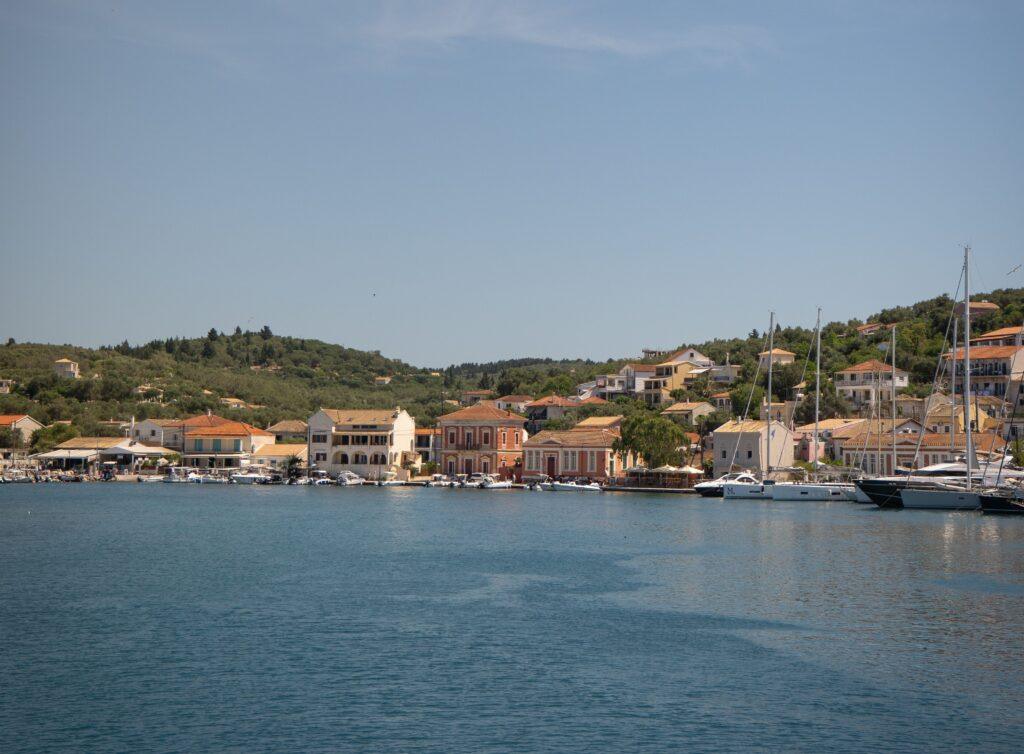
This isn’t just set-jetting- because Ithaca in Greece, Odysseus’ home and one of the most emotionally powerful destinations in the story, wasn’t even featured as a filming location in the movie, yet travelers are still flocking there (Sicily is a stand-in for Ithaca in the movie adaptation). People are not simply chasing screens; they are following in the footsteps of Odysseus himself, inspired by Homer’s epic journey and the mythology that shaped it.
You don’t necessarily have to visit the exact place where a movie was shot.
You want to visit the world of the story.
That could mean reading The Odyssey, listening to EPIC: The Musical, watching Nolan’s film, and then looking at a map and asking:
Wait- can we actually go there?
In many cases, the answer is yes.
And that makes this trend particularly fascinating for families.
You Can Actually Travel Into the World of The Odyssey
The geography of Homer’s epic is a mixture of mythology, ancient geography, and places that have been associated with the story for centuries. Some are firmly identified with particular myths; others are traditional associations rather than definitive historical locations.
But that is part of the fun.
Ithaca, Greece: The Home of Odysseus
Start where Odysseus longs to return to his beloved Penelope and son, Telemachus: Ithaca.
The Greek island of Ithaca is traditionally identified as the home of Odysseus and remains one of the most powerful places to visit if you want to connect the literary story with the real Mediterranean landscape.
It isn’t simply another beautiful Greek island.
You are standing on the island traditionally associated with the hero whose defining goal was getting home- and today, travelers are increasingly making the journey not because it appeared on screen, but because they want to step into the myth itself.
That changes how you see it.
Troy, Turkey: Where the Journey Begins
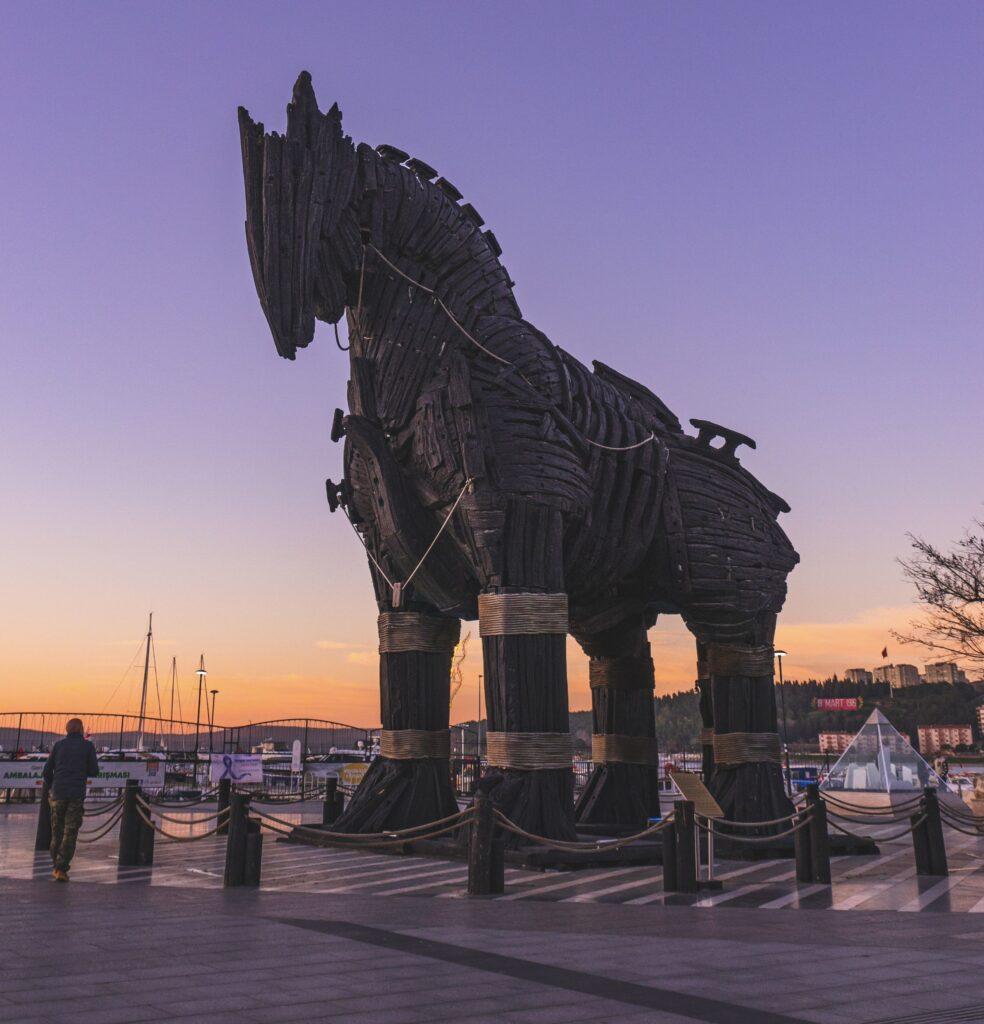
Across the Aegean, travelers can visit the archaeological site of Troy near Çanakkale, Turkey—the legendary city at the center of the Trojan War.
Troy is especially compelling because this isn’t just a mythical name on a map. Archaeological excavations have revealed layers of a real ancient settlement, while the Homeric story transformed Troy into one of the most famous cities in literature.
And interest is soaring.
Recent search data showed searches for Troy jumping more than 3,400%, with searches for flights to Troy also dramatically increasing following the release of Nolan’s film (Troy scenes were actually filmed in Morocco, which has also had a surge of interest).
That is The Odyssey Effect in a nutshell: people aren’t just watching the story.
They’re Googling where to go next.
Gozo, Malta: Calypso’s Island
Then there is one of the most intriguing stops: Gozo, Malta.
Gozo has long been traditionally associated with Ogygia, the island of Calypso, where the nymph holds Odysseus for seven years.
And you can visit the place known as Calypso’s Cave, overlooking Ramla Bay.
The cave has long been identified in local tradition with the cave where Calypso kept Odysseus captive.
For travelers, that makes Malta particularly fascinating because it isn’t simply a beautiful Mediterranean backdrop. It has a direct, centuries-old connection to one of the most memorable episodes in the story.
There is also a cinematic connection: Malta was used for supplementary production work on Nolan’s The Odyssey, including some of the Calypso scenes.
So Malta offers something special: you can visit the legendary location traditionally associated with Calypso while also experiencing a destination that has become part of the film’s production story.
Sicily: The World of the Cyclops
Sicily is another important stop in the Odyssey travel universe.
The island and surrounding waters have long been connected with the story of Polyphemus, the Cyclops, whom Odysseus encounters after leaving Troy.
Nolan’s production also filmed in Italy, including Sicily and the island of Favignana, although the movie deliberately uses real-world locations as imaginative representations rather than creating a literal map of Odysseus’ route.
That distinction is important.
The film isn’t saying, “This is exactly where Homer meant.”
It is creating a cinematic version of the myth—and giving travelers a whole new reason to explore the entire Mediterranean.
Capri and the Li Galli Islands: The Sirens
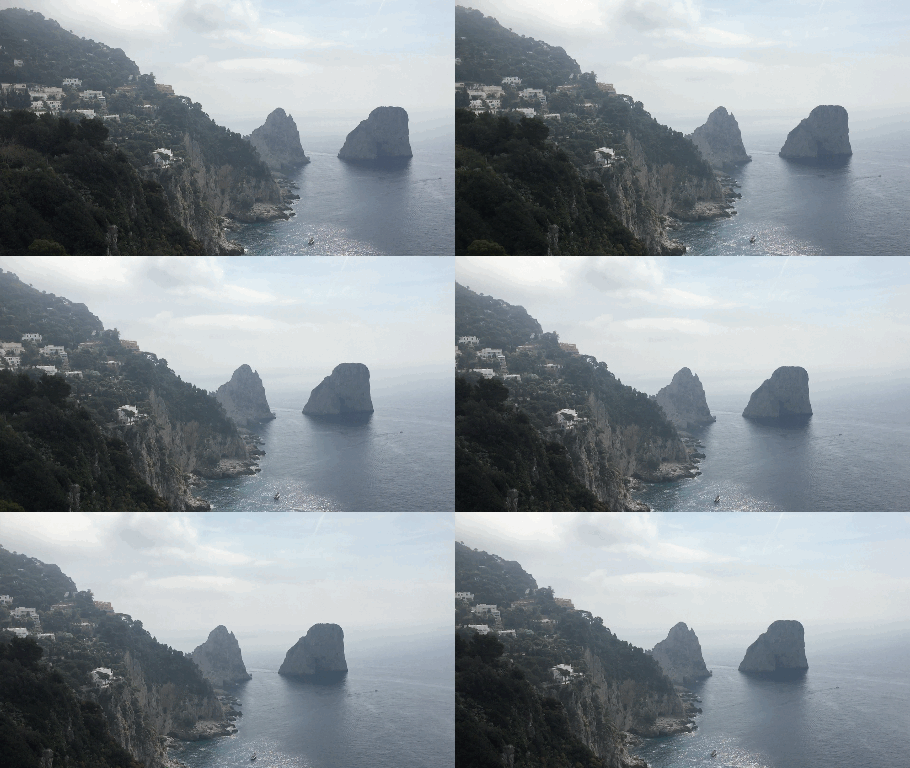
Then there are the Sirens.
The waters around Capri and the nearby Li Galli Islands have long been associated with the mythical creatures whose irresistible songs lured sailors toward destruction.
Whether or not we can prove that this is the precise geography Homer had in mind is almost beside the point.
Stand on the cliffs. Look out over the water. See the rocks below. Read the passage. You can almost picture the sirens on the rocks, swimming in the grottos.
Suddenly, the story feels very different.
And that is exactly what makes mythology-driven travel so powerful.
Corfu and the Phaeacians
Corfu is traditionally connected with the Phaeacians and the island kingdom where Odysseus is finally welcomed after his long journey.
It offers another way to approach the story—not through monsters or gods, but through hospitality and the final stages of Odysseus’ journey home.
But Here’s the Twist: The Movie Wasn’t Filmed Where the Myth Happened
One of the most fascinating parts of planning an Odyssey-inspired trip is comparing the places associated with Homer’s story with the places Christopher Nolan actually used to create his movie.
The production traveled across multiple countries, including Greece, Italy, Morocco, Iceland, and Scotland.
And the movie’s geography is intentionally imaginative.
Traditional mythology vs. Nolan’s filmmaking geography:
- Troy: traditionally associated with modern-day Turkey; Nolan filmed Troy sequences in Morocco, including Aït Benhaddou.
- Ithaca: traditionally the Greek island of Ithaca; Nolan used Favignana in Sicily to represent Ithaca.
- Cyclops: traditionally associated with Sicily and the western Mediterranean; Nolan filmed major Cyclops material in Greece, including Nestor’s Cave.
- The Underworld: a mythical realm rather than a conventional destination; Nolan used dramatic landscapes in Iceland.
- Circe: traditionally associated with the mythical island of Aeaea; Nolan used landscapes in Scotland.
- Calypso/Ogygia: traditionally associated with Gozo, Malta, and some of those scenes were filmed there, although the film’s primary production geography places its cinematic Ogygia in Morocco.
And that may be the most important lesson of all:
You don’t have to choose between the movie and the myth.
You can follow both.
Why This Could Be One of the Best Educational Travel Trends in Years
For families, I think this trend is particularly exciting because it starts with curiosity, the story, and the memory you want to create- not just the destination you want to visit. That’s the heart of what I call Memory-First Travel™: choosing experiences that give your family a story to connect with, a place to explore and, ultimately, a memory you’ll carry with you for years.
Instead of telling a child, “We’re going to Greece because it’s educational,” you give them a reason to care before they ever board the plane.
Read the story.
Listen to the musical.
Watch the movie.
Learn the mythology.
Then go experience it. Or as I mentioned on CBS, come for the mythology, stay for the history.
Because suddenly, history and literature aren’t just something they’ve seen in school.
They’re standing in it.
And honestly, I couldn’t be happier about it.
Because that’s what Memory-First Travel™ is all about. It’s not about how many destinations you can check off a list. It’s about creating the moments you’ll still be talking about years later.
So instead of simply checking “Ithaca” off a bucket list, imagine standing there with your child and talking about Odysseus finally making it home. Instead of simply visiting Malta, imagine exploring the place traditionally associated with Calypso after your child has spent weeks learning her story.
The destination becomes the setting. The story creates the connection. And the experience becomes the memory.
That’s when travel becomes more than sightseeing.
It becomes storytelling.
And the best educational travel doesn’t feel educational at all. For kids OR adults.
It feels like an adventure.
We’re Experiencing The Odyssey Effect Ourselves
And now, we’re going to do exactly that.
We’ve already promised to bring you along as we take our own journey inspired by this mythology boom- and we’re currently planning the adventure.
We’ll be following the stories, exploring the places connected to them, and discovering what happens when a story written thousands of years ago becomes the inspiration for a modern family adventure.
Because that’s what makes this moment so extraordinary.
The Odyssey was written nearly 3,000 years ago.
Yet today, a new generation is listening to it online, reading it in libraries and bookstores, watching it on the big screen- and searching for the places where its heroes supposedly walked, sailed, and battled monsters.
The technology has changed.
The medium has changed.
The audience has changed.
But the story still works.
And maybe that is the greatest travel lesson of all:
Stories can take us places long before we ever buy the ticket.
Now we’re ready to follow one.
We can’t wait to bring you along.
To watch the full segment on CBS, click here: https://www.8newsnow.com/news/las-vegas-now/the-new-odyssey-inspired-travel-trend/
AOL: https://www.aol.com/articles/odyssey-inspired-travel-trend-231050000.html